Artificial intelligence is no longer a distant concept in healthcare — it’s actively changing how radiologists work, how quickly diagnoses are made, and how hospitals manage their imaging workflows. The growing demand for imaging services, driven by an aging population and the rise in chronic diseases, has contributed to a significant radiology workforce shortage — one that AI is increasingly being called upon to solve.
With dozens of AI vendors flooding the market, radiology leaders face a tough question: How do you separate the tools that truly help from the ones that just sound impressive in a sales pitch?
1. Does It Solve a Real Problem — or Just Look Fancy?
The first question any radiology leader should ask is simple: What specific problem does this solve?
Good AI tools are built around actual pain points — reducing radiologist burnout, catching findings that might be missed on a busy night shift, or speeding up report turnaround times. Radiologist burnout remains stubbornly near 50%, driven by clerical overload, overtime, and the moral distress of delayed diagnoses.
An average radiologist is expected to interpret an image every 3 to 4 seconds during a typical 8-hour workday — a pace that inevitably leads to errors, poor decisions, and exhaustion.
AI that addresses this kind of specific, real-world pressure is worth your attention. AI that promises to “revolutionize everything” all at once is not.
2. Is the AI Trained on Relevant Data?
Not all AI is created equal — and in radiology, the training data behind a model matters enormously. Many algorithms were developed on datasets that under-represent minorities, women, pediatric populations, and patients from non-Western countries, meaning they may underperform when applied to diverse patient groups. When training data lacks diversity, bias becomes encoded in models that appear objective.
Ask vendors directly: Where did your training data come from? How diverse is it? How often is the model updated? A trustworthy AI company will be transparent about this and share validation studies, real-world performance benchmarks, and known limitations. If a company is cagey about its data sources, move on.
It’s also worth noting that FDA clearance alone does not guarantee that an AI algorithm will generalize to your specific patient population — the majority of external validation studies show reduced performance when algorithms are applied to new environments. Local validation with data from your own setting is strongly recommended.
3. How Does It Fit Into Your Existing Workflow?
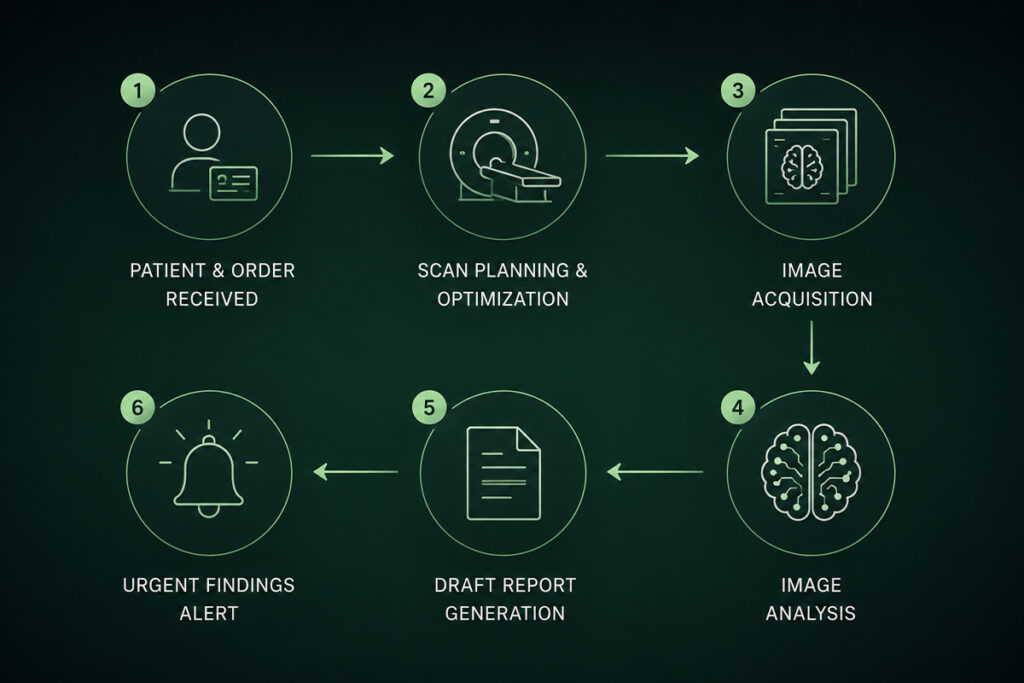
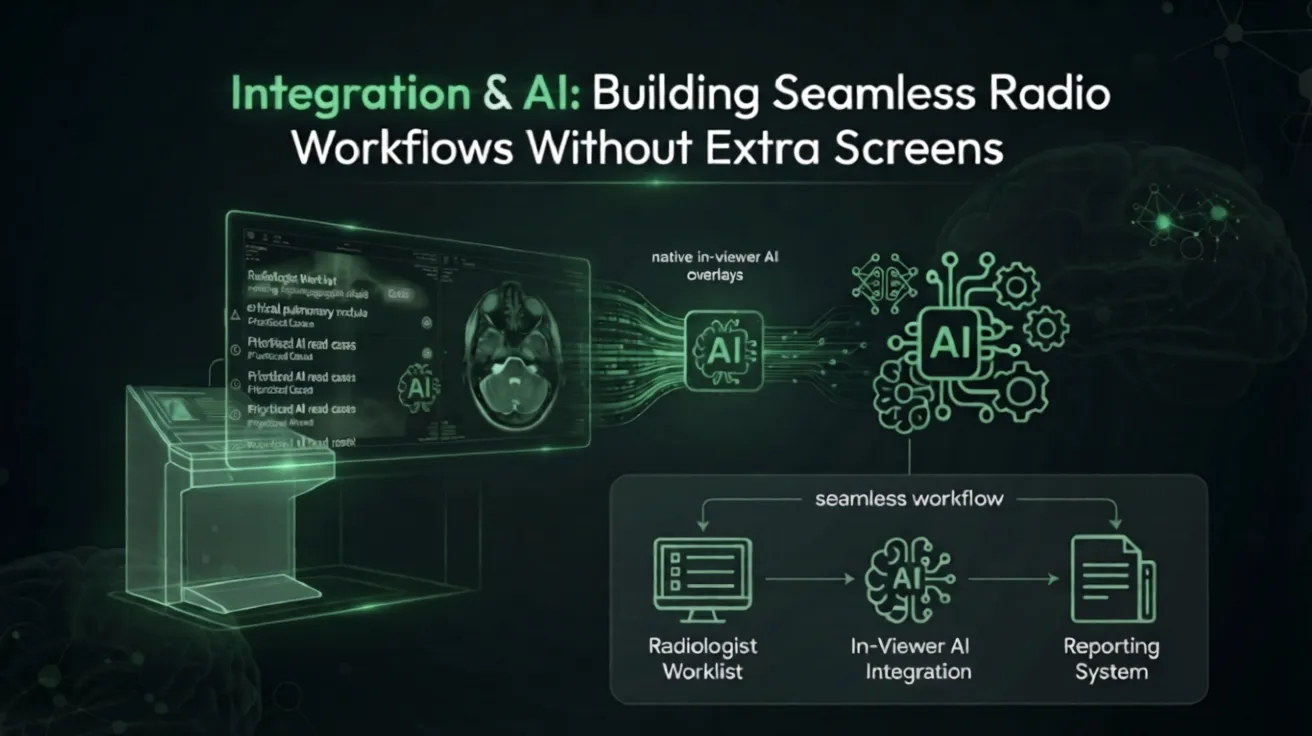
One of the biggest mistakes radiology departments make is choosing an AI solution that technically works — but practically disrupts everything. If radiologists have to switch between five different screens or re-enter data manually, adoption will fail no matter how good the underlying technology is.
Efficient integration of AI into existing PACS (Picture Archiving and Communication System) and EHR (Electronic Health Record) systems is crucial for seamless clinical workflows.
In 2025, AI value in radiology increasingly depended on integration, change management, and clear accountability — not just the strength of the algorithm itself.
At UevolveAi, we’ve always emphasized seamless tech integration as a non-negotiable. The same applies in radiology: if the tool creates friction, it’s the wrong tool.
4. Is There Real Clinical Evidence Behind It?
Marketing claims are easy to make. Peer-reviewed evidence is harder to fake. The good news is that radiology leads all medical specialties in FDA-cleared AI tools — as of end of 2025, radiology accounted for 75% of all FDA-authorized AI/ML medical devices, with over 1,000 radiology-specific clearances on record.
Source: The Imaging Wire — FDA Updates AI List with New Clearances (March 2026)
But volume of approvals isn’t the same as quality of evidence. Before committing to any solution, radiology leaders should ask for published clinical studies, independent performance benchmarks, and case studies from departments similar to theirs. Be skeptical of vendors who only share internal pilot data. Real clinical AI earns its credibility through rigorous, transparent testing — not polished brochures.
5. What Does Support and Training Look Like After Purchase?
Buying an AI tool is the beginning of a relationship, not the end of a transaction. Radiology leaders often underestimate how much ongoing support matters — especially in the first months of rollout when staff are still getting comfortable with a new system.
Platforms for multisite algorithm validation, radiologist feedback collection, and post-production performance monitoring are all essential components of a responsible AI deployment.
Ask the vendor: What does onboarding look like? Who do we call when something goes wrong? Is there a dedicated support team or just a help ticket system?
This is something UevolveAi prioritizes deeply — personalized support that ensures real adoption, not just theoretical installation. Radiology leaders deserve the same from their AI vendors.
6. Can It Scale — and Keep Up Over Time?
Even a great algorithm can underperform when protocols change or patient volumes surge. AI model performance can decline over time due to shifts in imaging equipment, software updates, or changing patient demographics — a phenomenon known as “model drift.”
That’s why long-term monitoring is a growing focus in radiology AI governance, with organizations like the American College of Radiology (ACR) actively developing practice parameters around AI lifecycle management.
The AI solution you choose today should be built to grow with you — with a vendor actively investing in improvements, roadmap transparency, and the ability to handle increased scan volumes without degrading performance.
The Bottom Line
Choosing an AI solution for your radiology department doesn’t have to be overwhelming — but it does require asking the right questions. Look for tools with clear clinical purpose, solid evidence, smooth integration, strong post-purchase support, and a vendor committed to long-term performance.
At UevolveAi, we believe smart technology adoption is about choosing tools that actually work in the real world — not just ones that look good in a demo room. The radiology leaders who take a thoughtful, criteria-driven approach to AI will be the ones who see lasting improvements in efficiency, accuracy, and team satisfaction.
The future of radiology is intelligent. Make sure your AI partner is too.
Frequently Asked Questions