Next-Gen Radiology Workflow Automation: Eliminating Bottlenecks from Order to Report
Think about what happens after a doctor orders a scan. The patient is scanned, the images are sent, a radiologist reads them, and a report goes back. It sounds simple, but delays can hide at every step. That’s why radiology workflow automation is getting so much attention. At UEVOLVEAi, we believe the real challenge isn’t finding problems on a scan; it’s everything around the reporting. Learn how RadNeo supports smoother reporting, how our teleradiology team keeps work moving around the clock, and how AI fits into PACS without extra hassle.
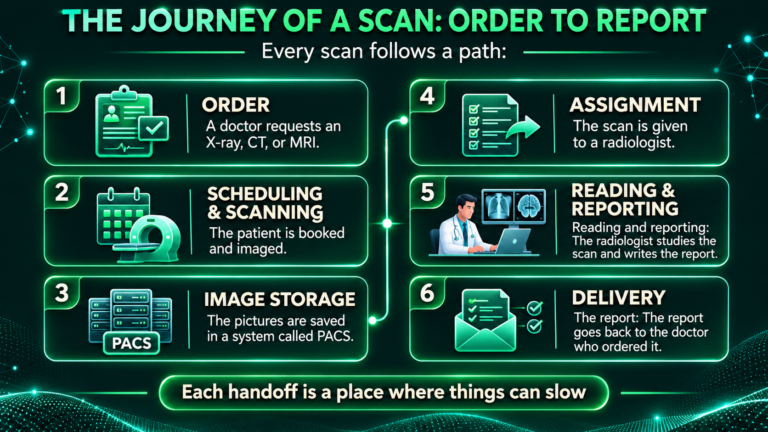
The Journey of a Scan: Order to Report
Every scan follows a path:
Each handoff is a place where things can slow down.
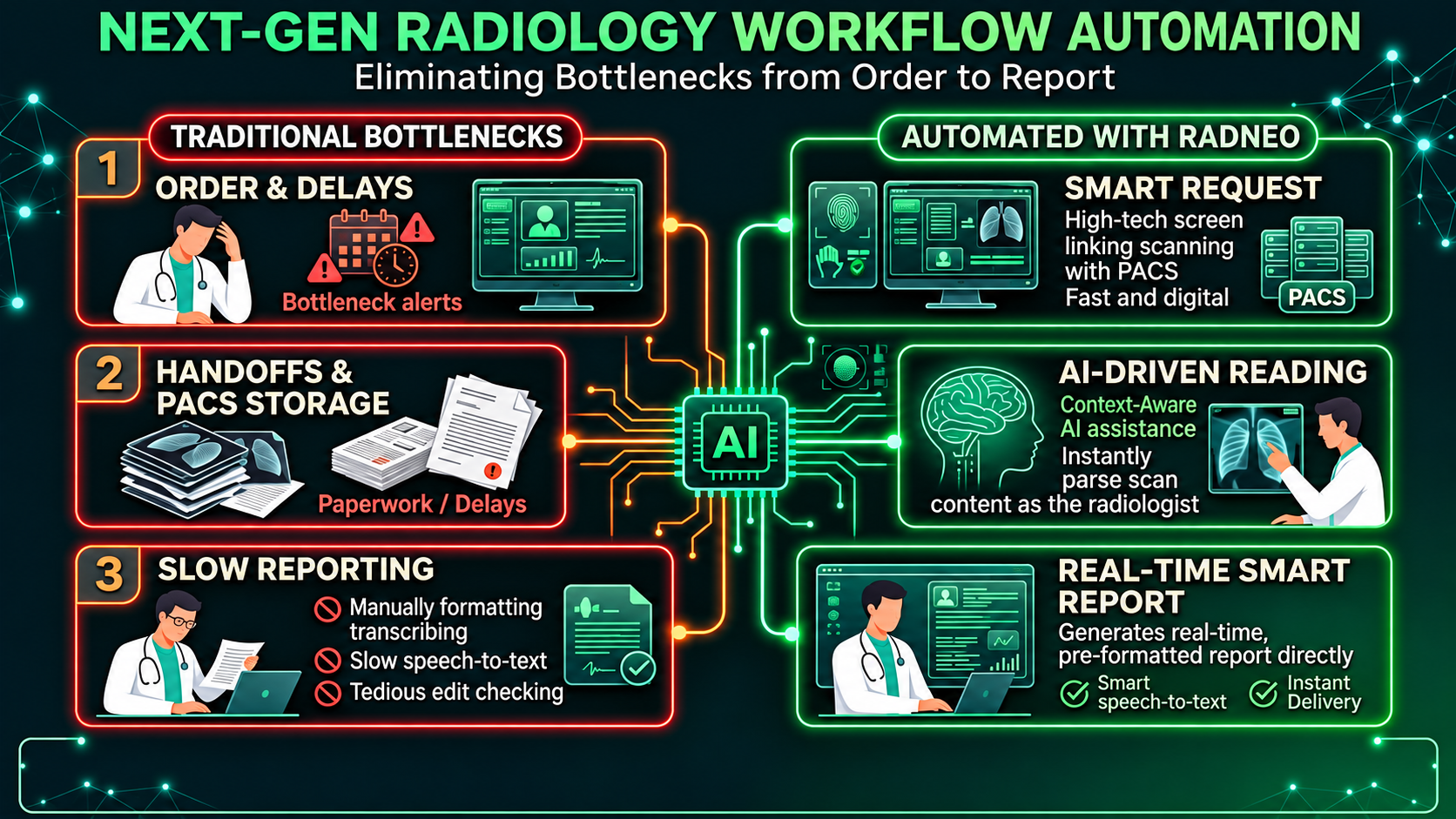
Where Do the Bottlenecks Hide?
Most delays aren’t about a doctor taking too long to read a scan. They come from everyday friction:
What Is Radiology Workflow Automation?
In plain words, it means letting smart software handle the repetitive steps so people can focus on the important ones. It doesn’t remove doctors from the process. It removes the busywork around them.
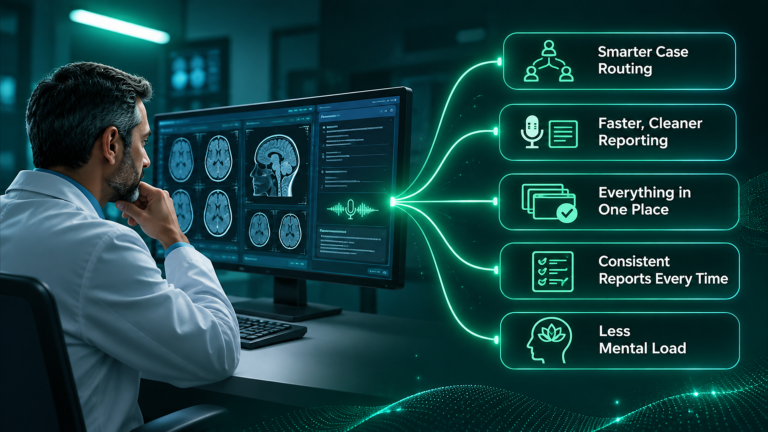
How Next-Gen Automation Clears the Road
What Smart Automation Looks Like in Real Life
Picture a busy imaging center on a Monday morning. Scans pour in. Urgent ones are flagged and sent to the right specialist right away. The radiologist dictates findings, and the report forms neatly on screen. A quick review, a sign-off, and the report is delivered. No hunting through systems, no long typing sessions, and no urgent scan sitting in a queue.
Does Automation Replace Radiologists?
No. The radiologist always reviews the scan and makes the final decision. Automation is like a helpful assistant that keeps the paperwork moving so the doctor can concentrate on what only a trained expert can do.
How to Know If Your Practice Is Ready
If you said yes to any of these, workflow automation could help.
The Bottom Line
Faster reports don’t come from rushing doctors. They come from clearing the road in front of them. By automating the repetitive steps from order to report, imaging teams can cut delays, keep reports consistent, and give radiologists room to do their best work.
Frequently Asked Questions