RadNeo vs Traditional Radiology Reporting Software: What Changes in the Reading Room
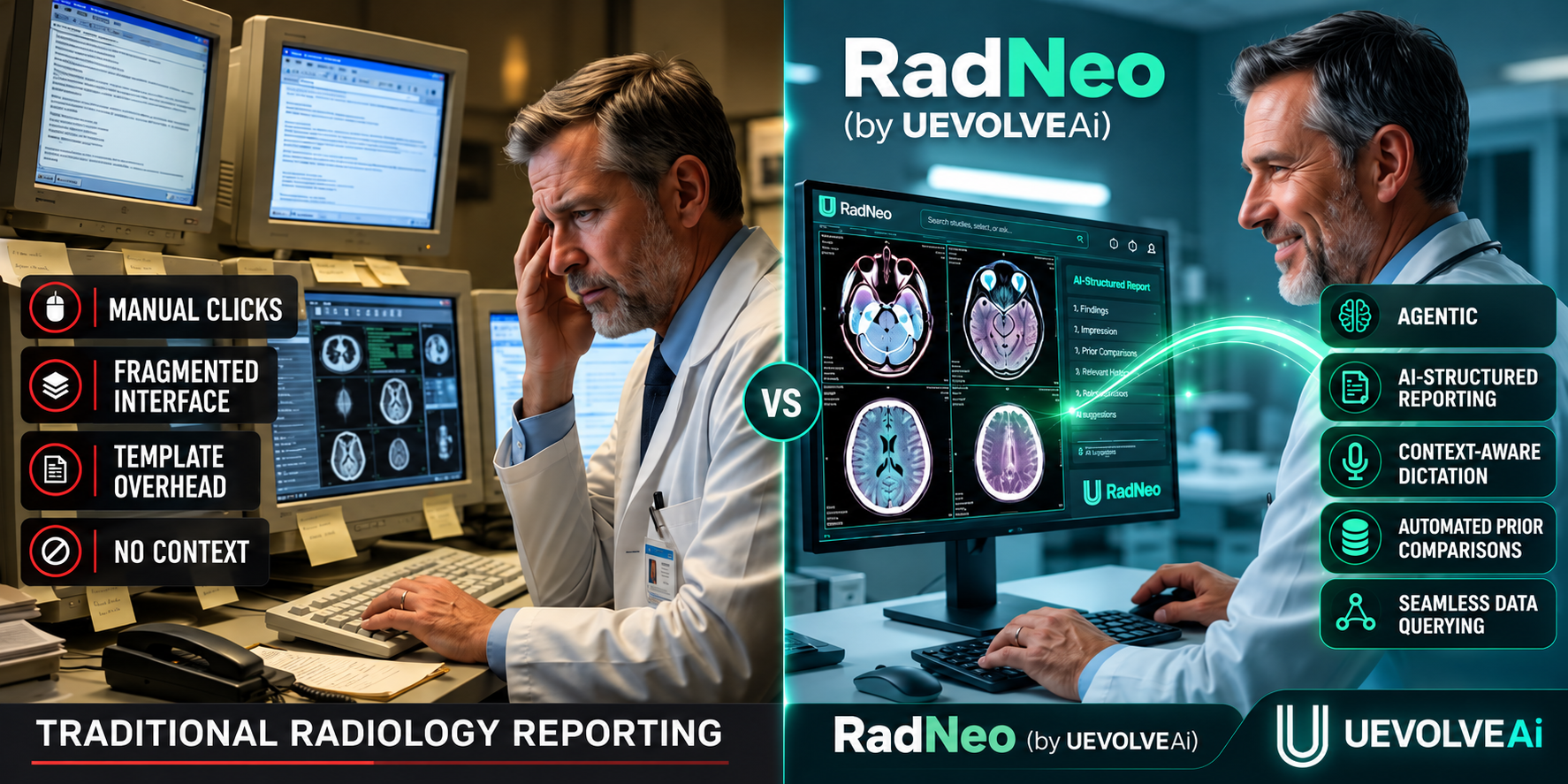
Every radiologist knows the feeling: the scan is easy to read, but writing the report takes forever. Old-style reporting tools were built to record what a doctor says, not to help them work faster. That is the gap RadNeo was built to close. In this post, we compare RadNeo with traditional radiology reporting software in plain words. If you run a teleradiology practice or are curious about AI that fits into PACS workflows, this one’s for you.
What Is a Reading Room, Anyway?
The reading room is where radiologists look at scans like X-rays, CT, and MRI, then write reports for other doctors. It’s a quiet, screen-filled space where accuracy and speed both matter, and where a lot of time goes into paperwork instead of patient insight.
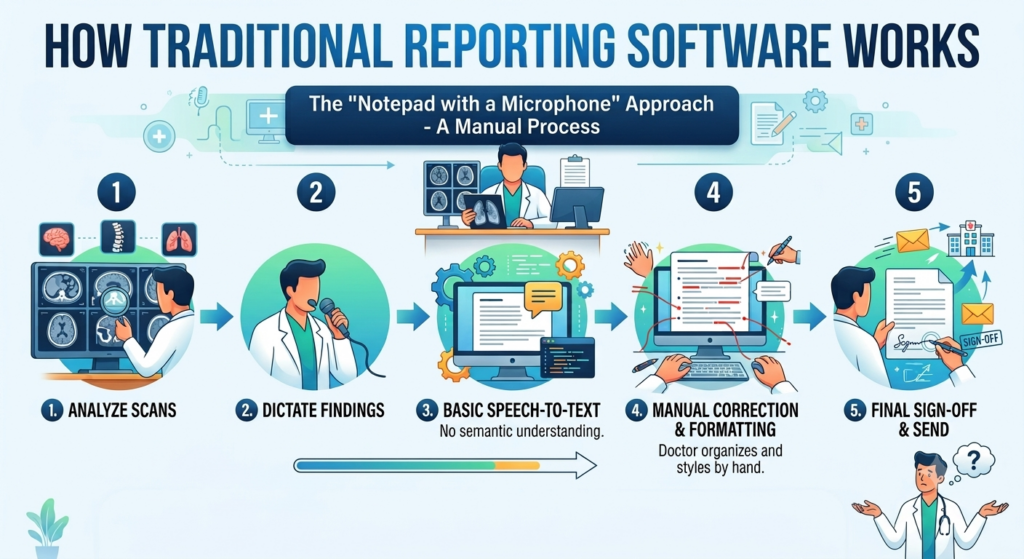
How Traditional Reporting Software Works
Most older reporting tools follow the same routine:
Nothing is “wrong” with this. But the software is basically a notepad with a microphone. It doesn’t understand what the doctor is describing, so the doctor does most of the organizing by hand.
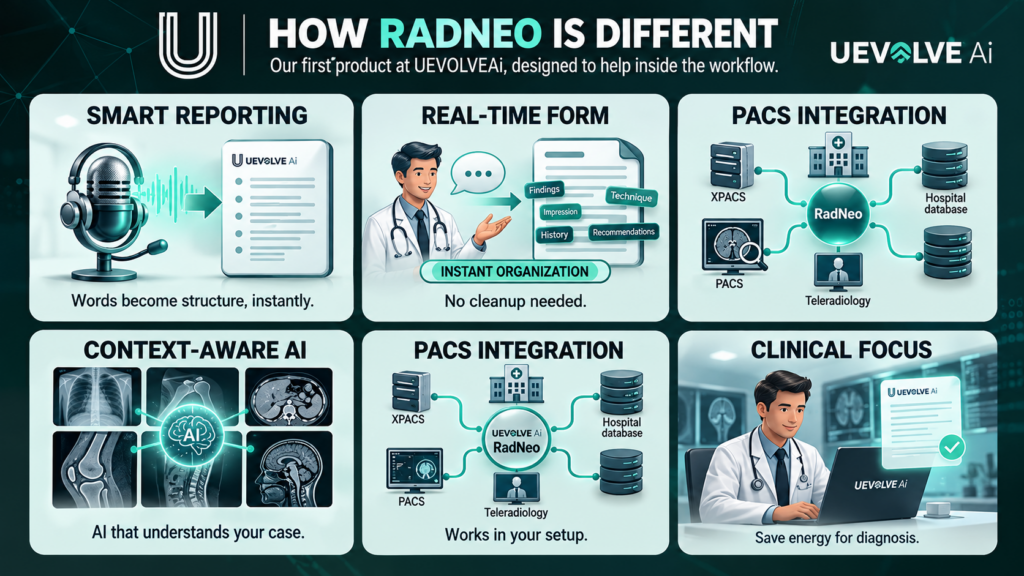
How RadNeo Is Different
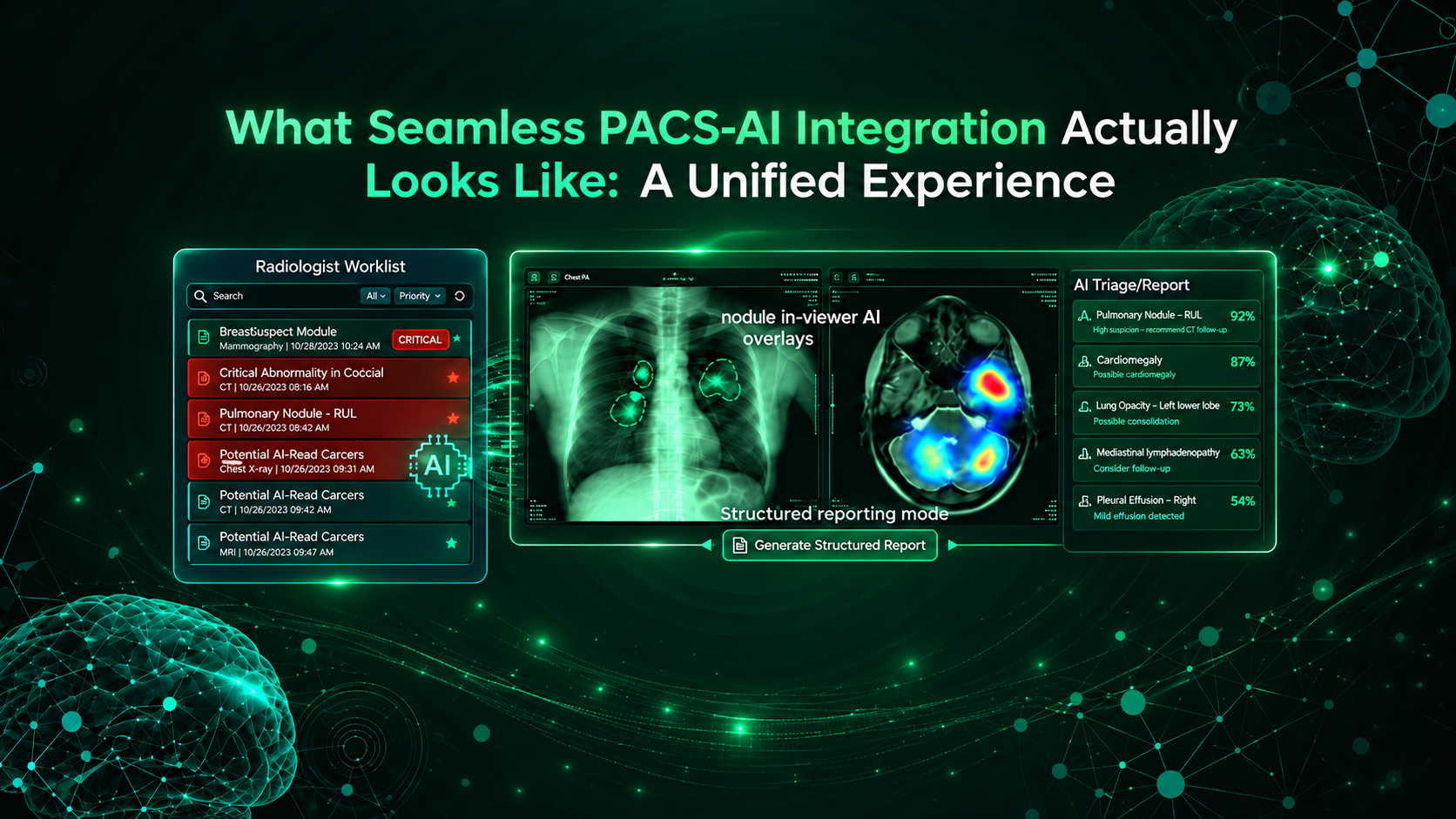
RadNeo is our first product at UEVOLVEAi, and it’s designed around one idea: AI shouldn’t just detect things, it should help inside the workflow. Here’s what changes.
Side-by-Side: A Quick Comparison
| | Traditional Software | RadNeo |
How it works | Turns speech into text | Turns speech into structured reports |
Formatting | Done by hand | Organized as you speak |
Understanding | Doesn’t understand the case | Follows the context of the case |
Fit with workflow | Often a separate step | Built to work inside existing systems |
Doctor’s effort | Lots of cleanup | More focus on diagnosis |
Who Benefits the Most?
Does AI Replace the Radiologist?
No. The radiologist still reviews every scan and makes the final decision. RadNeo simply takes care of the repetitive work around the report, like a helpful assistant sitting beside the doctor.
The Bottom Line
Traditional reporting software records what you say. RadNeo helps you get from dictation to a clear, finished report with less effort. For busy reading rooms, that can mean faster work, more consistent reports, and happier radiologists.
Frequently Asked Questions