AI in Teleradiology: How Machine Learning Makes Scan Reports Faster and Better Across the US
Think about the last time you or someone you know had an X-ray, CT scan, or MRI. The scan was quick, but waiting for the report probably felt long. That wait is what AI in teleradiology is helping to shorten. At UEvolveAI, our teleradiology services and our AI reporting tool, RadNeo, are built to help US hospitals get accurate reports sooner, without cutting corners on quality.
Let’s break down how it works in plain language.
What Is Teleradiology, Really?
Teleradiology means a radiologist (a doctor who reads medical scans) reviews your images remotely, over a secure internet connection. The doctor doesn’t need to be in the same building, or even the same state.
This is a big help for hospitals that don’t have a radiologist available at night, on weekends, or in small towns. Scans go out, expert reports come back.
Why the US Needs a Faster System
Hospitals in the US are doing more scans every year, but there aren’t enough radiologists to read them all. The result is long worklists, tired doctors, and patients waiting longer than they should.
Machine learning, a type of AI that learns patterns from huge numbers of past scans, helps close this gap.
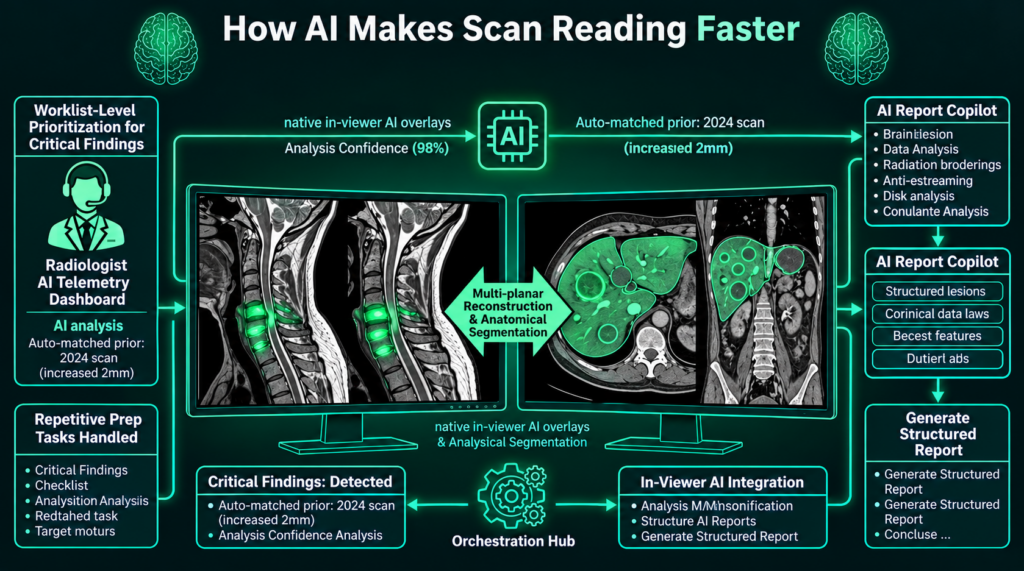
How AI Makes Scan Reading Faster
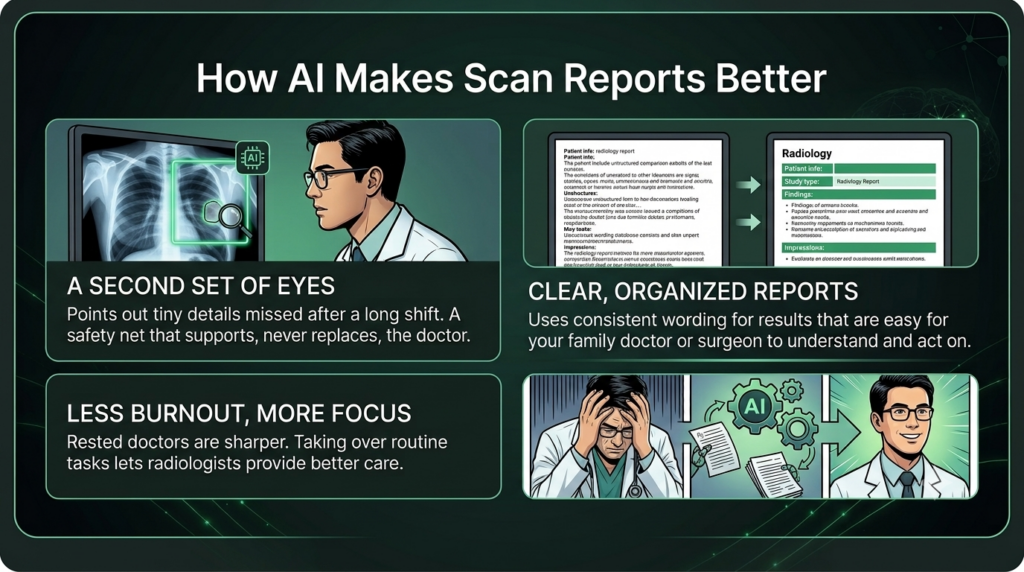
How AI Makes Scan Reports Better
Who Benefits the Most?
What to Look for in a Teleradiology Partner
Before choosing a provider, ask these simple questions:
Final Thoughts
AI is not here to replace radiologists. It is here to give them better tools so patients get faster, clearer answers. If your hospital or imaging center wants to cut waiting times and improve report quality, now is a great time to explore AI-powered teleradiology.
Frequently Asked Questions